







Muscle pain that lingers after rest or stretching often signals something deeper. Knots form, movement stiffens, and discomfort becomes a daily companion. For many in Davie, dry needling targets those stubborn spots, breaking up tension that refuses to let go and helping you move freely again.
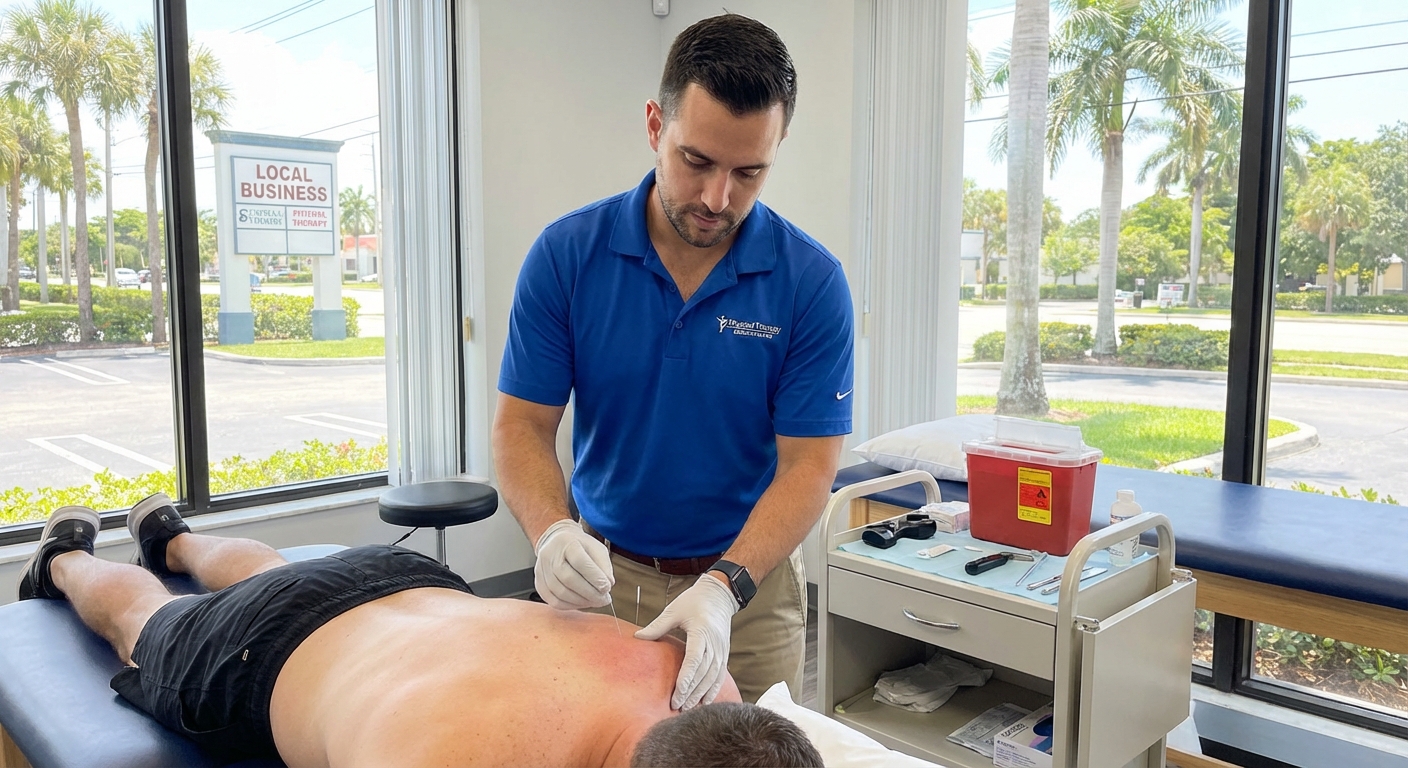
This approach stands apart from acupuncture. Instead of following traditional patterns, dry needling uses thin, sterile needles to reach the exact muscle bands causing trouble. Whether pain has been around for months, started after an injury, or keeps you from your sport, this method goes straight to the source and delivers relief where it counts.
How We Use Dry Needling to Break the Pain Cycle
When a muscle locks up, it doesn’t just ache. It limits what you can do. Our therapists use dry needling to reach those locked trigger points. With careful hands and a deep understanding of muscle behavior, we insert a fine needle into the tight spot. The muscle reacts, tension drops, and blood flow returns. Sometimes the release is immediate; other times, it takes a few sessions for the muscle to fully let go. Either way, the focus stays on restoring movement and easing pain, not just masking symptoms.
We don’t guess. Years of experience and training in myofascial pain let us find the right spots by feel and by watching how you move. Each session is customized to your body and your pain pattern, so you get targeted results—not a one-size-fits-all approach.
What We Treat with Dry Needling
Muscle tension doesn’t play favorites. It shows up in the neck, back, shoulders, and even as headaches. We see it in athletes, office workers, and anyone who’s pushed their body past its limit. Here’s where dry needling makes a difference most often for our Davie clients:
- Chronic Neck and Shoulder Pain: Tension that builds from long hours at a desk or repetitive movements.
- Lower Back Pain: Tight muscles that limit bending, twisting, or standing for long periods.
- Headaches and Migraines: Trigger points in the upper back and neck that send pain upward.
- Tendonitis and Overuse Injuries: Stubborn tightness around joints that lingers after activity.
- Sciatica and Nerve Pain: Muscles that clamp down on nerves, sending pain down the leg or arm.
When muscles stay tight, they pull on joints and press on nerves. Pain spreads, movement suffers, and daily life gets harder. Dry needling interrupts that cycle, giving your body a real chance to recover.
How We Release Deep Muscle Knots
With some injuries, muscle fibers contract and refuse to relax. These trigger points don’t just hurt where they form. A knot in the shoulder can send pain down the arm, while hip tightness can show up as knee pain. By inserting a needle into the trigger point, we prompt a twitch response. The muscle contracts, then lets go. Blood moves in, oxygen levels rise, and healing starts.
Manual therapy can help, but when tension runs deep, dry needling reaches what hands can’t. For many clients in Davie, it’s the missing piece that finally brings relief after months of frustration.
Supporting Athletes with Targeted Dry Needling
Sports demand a lot from muscles. Overuse, imbalances, and minor strains can build up until performance drops or injury strikes. We use dry needling to address these issues before they sideline you. During recovery, it helps break up scar tissue and restore normal movement, so you get back to training sooner.
- Hamstring Strains: Tightness that slows you down or keeps coming back after a sprint.
- Rotator Cuff Pain: Shoulder discomfort that lingers through every throw or lift.
- IT Band Syndrome: Outer thigh tension that turns every run into a struggle.
- Calf and Achilles Issues: Stiffness that saps your push-off and endurance.
- Hip Flexor Tightness: Shortened stride and lost power during sprints or jumps.
Most athletes notice changes within a few sessions. There’s no need for long breaks. Treatment fits around your training, so you keep moving while you heal.
What to Expect During Your Session
For many, the idea of needles brings hesitation. In practice, dry needling feels different from what you might expect. The needles are extremely thin, and while you may notice a quick pinch, the main sensation comes from the muscle itself. When the needle finds a trigger point, you’ll feel a twitch or a deep ache. Uncomfortable, but not sharp or overwhelming. That feeling fades fast once the needle is out.
Sessions usually last between 15 and 30 minutes, depending on how many areas need attention. Afterward, mild soreness is common, much like after a deep massage. Staying active and drinking water helps clear it up quickly.
Our Approach to Safety and Recovery
When you come in for dry needling, every needle is sterile and single-use. We dispose of them immediately after treatment. Infection risk stays extremely low, and the most common after-effect is mild, short-lived soreness. After a session, your muscles may feel tired or achy as they adjust. Here’s what we recommend for a smooth recovery:
- Stay Hydrated: Drinking water helps your body flush out waste and recover faster.
- Move Gently: Light activity keeps blood flowing and prevents stiffness.
- Avoid Heavy Lifting: Give treated muscles a day or two before pushing them hard again.
- Apply Heat if Needed: Warmth can ease lingering soreness and support healing.
- Follow Your Therapist’s Plan: We combine dry needling with strengthening and movement work for lasting results.
Some people feel better after one visit, while others need a few sessions to see full results. Chronic pain often takes longer to resolve, but steady progress is the goal.
Let's Get You Moving Without the Pain
Muscle tension doesn’t have to control your day. Trigger point therapy offers a direct way to release what’s holding you back. Call Atlantic Rehab Center at 954-474-3611 or request an appointment to schedule your session.