






Can Physical Therapy in Davie Help Speed Up ACL Recovery?
Most people think ACL recovery is just about waiting it out. Rest, ice, maybe surgery, then hope for the best. But the reality is messier than that — and if you're not actively working through rehab, you're asking for a longer timeline and a weaker knee. Physical therapy isn't optional. It's the difference between getting back to full speed and limping through the rest of your season.
So here's what matters. If you've torn your ACL or had it reconstructed, the clock starts now. Every week you delay structured rehab is a week you lose in strength, stability, and confidence. The ligament might heal on its own timeline, but the muscles, balance, and movement patterns around it? Those need work. And that work needs to be guided, progressive, and grounded in what your knee can actually handle — not what you think it should be doing.
Why the Ligament Alone Isn't Enough
Your ACL stabilizes the knee. That's its job. But when it tears, the surrounding muscles, tendons, and proprioceptive systems take a hit too. Even after surgery, the ligament graft needs time to integrate. During that window, your body compensates — and not always in ways that help.
Physical therapy steps in to retrain those systems. It's not just about bending and straightening your leg. It's about teaching your brain and body how to move together again. Without that retraining, you're left with a structurally repaired knee that doesn't function like it used to. And that's when re-injury happens.
What Happens in the First Few Weeks
Right after injury or surgery, swelling and pain dominate. Your knee feels stiff, unstable, and foreign. This is where physical therapy starts — not with heavy lifting, but with controlled movement and inflammation management.
Therapists use manual therapy techniques, ice, compression, and gentle range-of-motion exercises to keep the joint mobile without stressing the healing tissue. The goal isn't to push hard. It's to prevent stiffness, maintain circulation, and set the stage for the next phase. Skip this step, and you'll spend months fighting scar tissue and limited mobility.
Strength Comes Back in Stages
Once the initial inflammation settles, the real work begins. Your quadriceps and hamstrings need to fire again. Your glutes need to stabilize. Your calves need to support. None of this happens on its own.
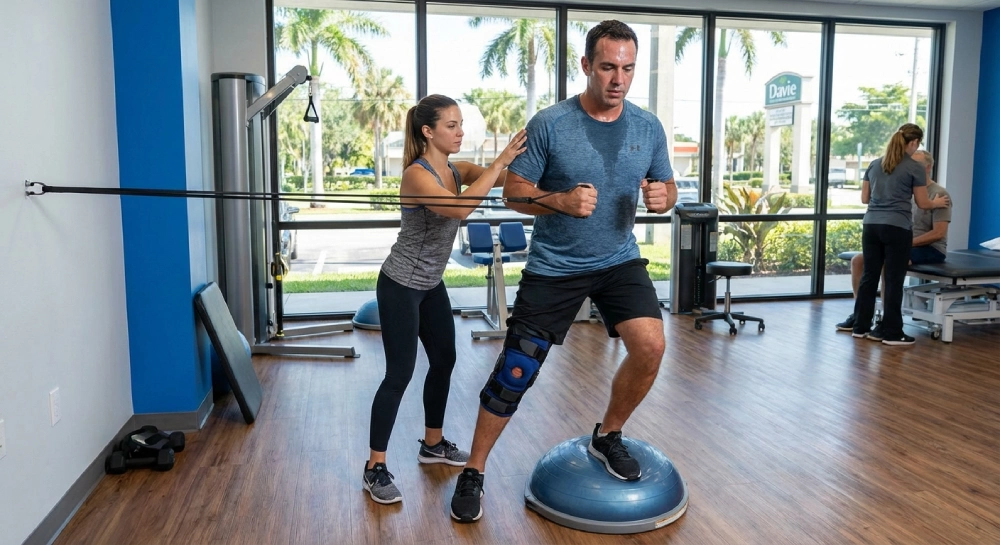
Physical therapists in Davie design progressive strength programs that match your healing timeline. Early on, that might mean isometric holds and light resistance. Later, it shifts to dynamic movements, plyometrics, and sport-specific drills. The progression matters. Push too hard too soon, and you risk graft failure. Move too slowly, and you lose muscle mass and coordination.
Balance and Proprioception Get Overlooked
Most people focus on strength and forget about balance. But proprioception — your body's ability to sense where your knee is in space — is critical for preventing re-injury. ACL tears disrupt that feedback loop, and surgery doesn't automatically restore it.
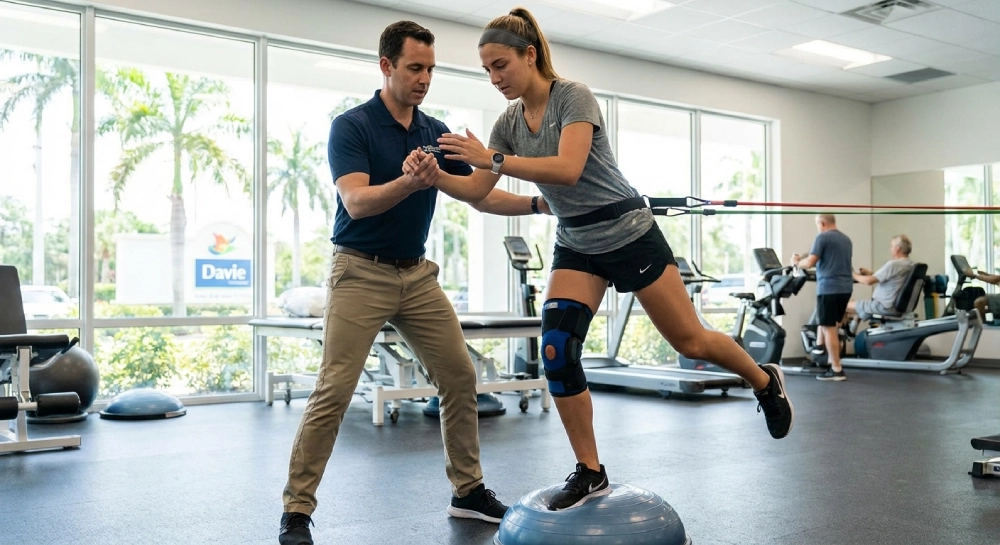
Physical therapy includes balance disorders treatment, single-leg exercises, and unstable surface training to rebuild that connection. These exercises might look simple, but they're teaching your nervous system how to react when your foot hits the ground at an awkward angle. That's what keeps you upright when you pivot, jump, or change direction.
The Tools That Make a Difference
Davie clinics often use advanced techniques to accelerate recovery. These aren't gimmicks — they're evidence-based tools that enhance the rehab process.
- Neuromuscular electrical stimulation (NMES) activates muscles that aren't firing on their own, especially the quad, which tends to shut down after ACL surgery.
- Blood flow restriction (BFR) training allows you to build strength with lighter loads, reducing stress on the healing ligament while still triggering muscle growth.
- Motion analysis tools track your gait and movement patterns, identifying compensations that could lead to future problems.
- Manual therapy techniques address scar tissue, joint stiffness, and soft tissue restrictions that limit mobility.
- Functional movement screens assess readiness for sport-specific activities, ensuring you're not returning too soon.
When Rehab Gets Skipped or Rushed
We see it all the time. Someone feels better at six weeks and assumes they're good to go. They skip the last few months of therapy, jump back into their sport, and end up re-tearing the graft or injuring the other knee.
ACL recovery isn't about how you feel. It's about objective markers — strength ratios, hop test results, movement quality. Physical therapists track these metrics to determine when you're actually ready. Guessing doesn't work. And neither does ignoring the final phase of rehab just because you're bored or impatient.
What You Need to Bring to the Table
Physical therapy works, but only if you show up. That means attending sessions, doing home exercises, and following the plan even when it feels tedious. The therapist can guide you, but they can't do the reps for you.
Consistency is everything. Missing sessions or half-doing exercises slows progress and increases risk. If you're serious about getting back to full function, treat rehab like the job it is. Log your exercises. Track your pain. Communicate with your therapist. The more engaged you are, the faster and safer your recovery will be.
The Timeline Isn't One-Size-Fits-All
Some people are cleared for sport at six months. Others need nine or twelve. The timeline depends on the severity of your injury, the quality of your surgery, your age, your activity level, and how hard you work in therapy.
Don't compare your recovery to someone else's. Focus on hitting your own milestones — full range of motion, quad strength within 90% of the uninjured leg, passing functional tests. Those benchmarks matter more than the calendar.
Common Mistakes That Slow You Down
Plenty of people sabotage their own recovery without realizing it. Here's where most go wrong.
- Skipping home exercises because they seem too easy or boring.
- Returning to high-impact activities before passing objective tests.
- Ignoring pain signals and pushing through discomfort that's actually a warning sign.
- Neglecting the opposite leg, which often compensates and becomes overworked.
- Stopping therapy too early because insurance ran out or motivation faded.
Why Davie Therapists Understand the Local Athlete
Davie isn't just any town. It's home to athletes at every level — high school players, weekend warriors, recreational runners. Physical therapists at our Davie FL clinic understand the demands of those activities and design rehab programs that reflect real-world movement.
They're not just checking boxes. They're preparing you for the specific stresses your knee will face when you return to your sport. That means sport-specific drills, agility work, and return-to-play protocols that match your goals. It's personalized, practical, and built around what you actually need to do.
When to Start and When to Stop
Start physical therapy as soon as your surgeon clears you — often within days of surgery. Early intervention prevents stiffness, maintains muscle activation, and sets the foundation for everything that follows.
As for when to stop? Not until you've been formally cleared. That means passing strength tests, demonstrating proper movement mechanics, and completing a full return-to-sport progression. Stopping early is one of the biggest mistakes you can make.
Recovery Isn't Just About the Knee
ACL rehab forces you to address weaknesses you didn't know you had. Hip instability. Core weakness. Poor landing mechanics. Physical therapists identify and correct these issues, which not only speeds up recovery but also reduces the risk of future injuries.
Think of it as a full-body tune-up. You came in for a knee pain relief problem, but you're leaving with better movement patterns, stronger stabilizers, and a clearer understanding of how to protect your joints long-term.
The Bottom Line on ACL Recovery
Physical therapy doesn't just help speed up ACL recovery in Davie — it's the backbone of the entire process. Without it, you're gambling with your timeline, your function, and your future. With it, you're giving yourself the best shot at a full, confident return to the activities that matter most. The work isn't easy, but the payoff is worth it. Show up, do the reps, and trust the process.
Let’s Get You Back on Track
We know how important it is to get back to the activities you love with confidence and strength. Our team is here to guide you every step of the way, making sure your ACL recovery is as smooth and effective as possible. If you’re ready to take the next step, give us a call at 954-474-3611 or request an appointment and let’s start your journey to a stronger, healthier knee together.
‹ Back
Recent Posts
-
Can Physical Therapy in North Miami Beach Ease Neck Pain From Sports?
September 2, 2026
-
-
Can Physical Therapy in Davie Help After an ACL Tear?
August 5, 2026
-
-