







Can Physical Therapy in Pembroke Pines Relieve Rotator Cuff Pain?
Most people with shoulder pain assume it's just part of getting older or pushing too hard at the gym. Maybe it is. But rotator cuff damage doesn't heal itself, and ignoring it only makes things worse. The good news? Physical therapy works — if you're willing to show up and do the work. In Pembroke Pines, clinics are full of therapists who've seen it all, from weekend warriors to retirees who can't sleep on one side anymore. They know what works and what doesn't.
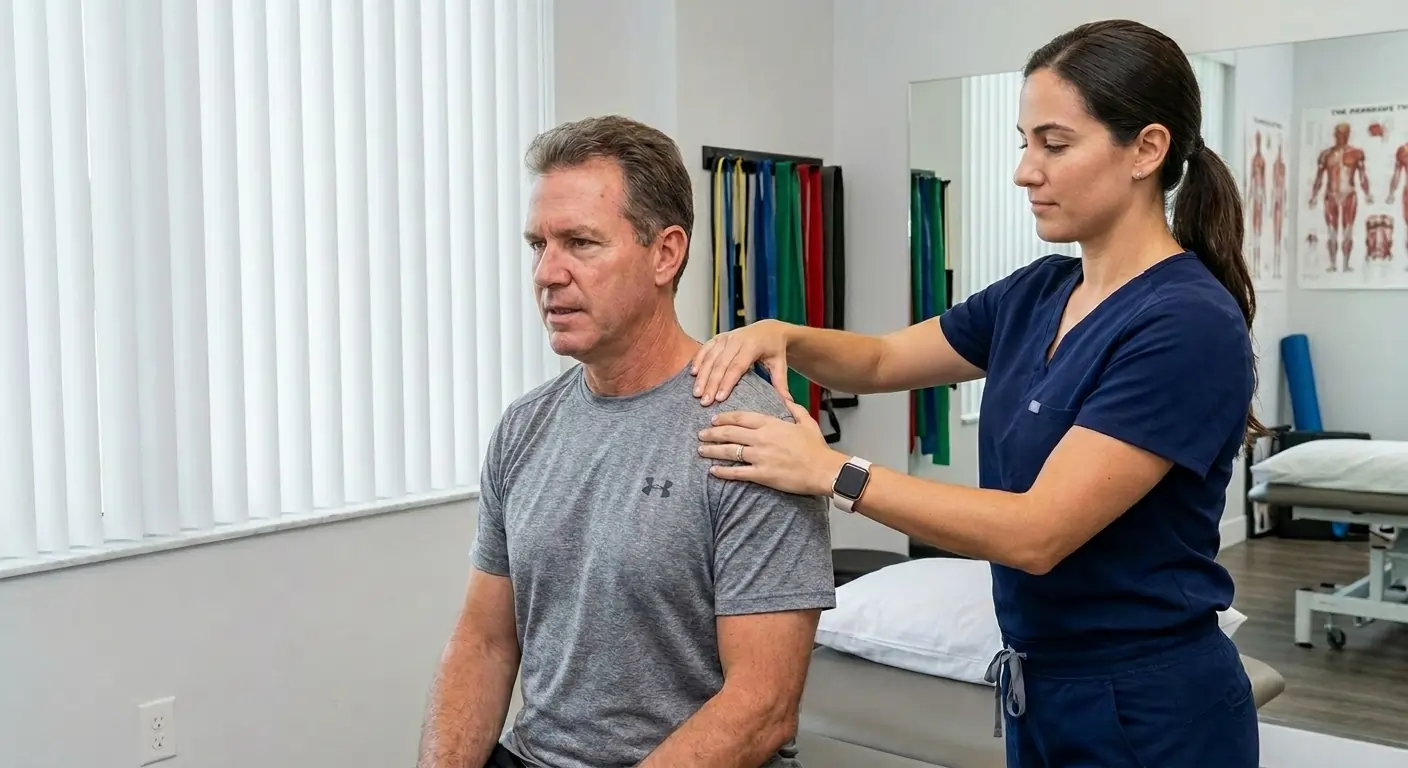
Here's what matters. If your shoulder hurts when you reach overhead, can't lift your arm without wincing, or wakes you up at night, you're dealing with rotator cuff strain or worse. Physical therapy won't magically fix it overnight, but it can rebuild strength, cut the pain, and get you back to normal without going under the knife.
Four Muscles That Hold Everything Together
Your rotator cuff isn't one thing — it's a system. Four muscles and their tendons wrap around your shoulder joint and keep the ball of your upper arm locked into the socket. When one of those muscles tears, frays, or inflames, the whole mechanism falls apart. You lose stability. You lose range. And you lose sleep because lying on that side feels like someone's jamming a screwdriver into your joint.
Injuries happen two ways. Either you tear something in a fall or lifting something heavy, or you wear it down over years of repetitive motion. Painters, construction workers, tennis players — they all see it. The damage compounds slowly until one day your arm just won't cooperate anymore. And by then, scar tissue and weakness have already set in.
How Therapy Targets the Real Problem
Physical therapy isn't about masking the pain with pills or injections. It's about fixing the mechanics that caused the problem in the first place. Therapists in Pembroke Pines start by assessing how bad the damage is, then build a plan around your specific injury and lifestyle. You're not getting a generic handout — you're getting targeted work that addresses your weak points.
Most programs focus on a few core goals weak points.
Most programs focus on a few core goals:
- Calming inflammation through modalities like ice, heat, ultrasound, or electrical stimulation
- Loosening up frozen or stiff joints with manual stretching and mobilization
- Rebuilding strength in the rotator cuff and stabilizer muscles to support the joint
- Teaching proper movement patterns so you don't wreck it again next month
- Tracking progress week by week and adjusting the plan when something isn't working
Your First Session Won't Be a Workout
Walk into a Pembroke Pines clinic for the first time and expect questions. Lots of them. Your therapist will want to know how you got hurt, what movements cause pain, and what you've tried so far. Then comes the hands-on evaluation — they'll test your range of motion, check for weakness, and poke around to see where the inflammation lives.
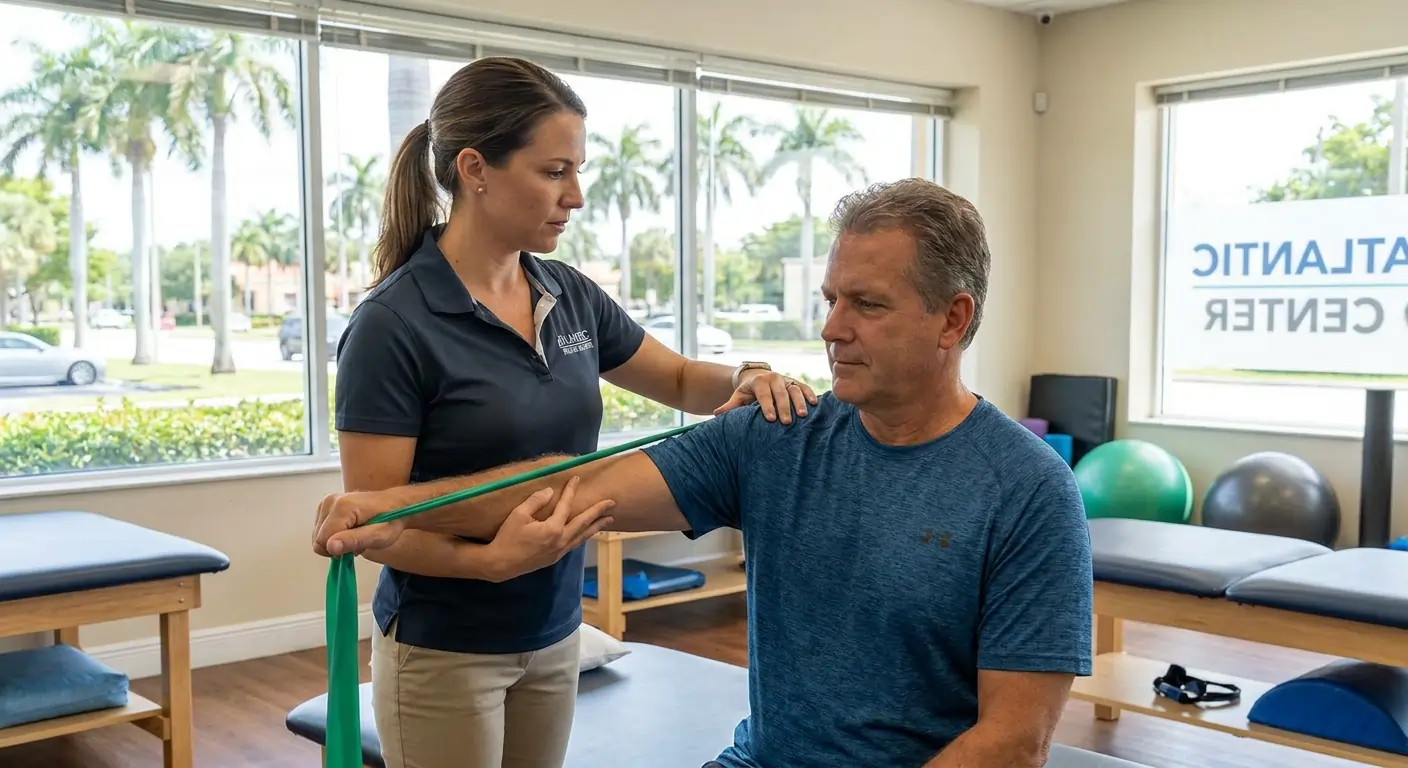
The early sessions are about bringing the pain down. You might get manual therapy, some gentle stretching, or modalities that calm the tissue. Once the worst of it subsides, the real work begins. That's when they start loading your shoulder with exercises designed to rebuild what's been lost. It's not glamorous. It's controlled, progressive, and it works if you stick with it.
What You'll Gain Beyond Pain Relief
Therapy doesn't just stop the ache — it resets how your shoulder functions. A good therapist will teach you how to move without aggravating the injury, how to strengthen the muscles that protect the joint, and how to spot warning signs before things spiral again. You'll walk out with a toolbox, not just a temporary fix.
Here's what most patients notice:
- Less pain during everyday tasks like reaching into cabinets or lifting groceries
- Better sleep because they're not waking up every time they roll over
- Improved strength and confidence in overhead movements
- Reduced reliance on painkillers or anti-inflammatory meds
- A clear understanding of what caused the injury and how to avoid it moving forward
Why Therapy Beats Pills and Needles
Medication can dull the pain for a few hours. Injections might buy you a couple months. But neither one fixes the underlying weakness or dysfunction. Surgery has its place — torn tendons sometimes need repair — but most rotator cuff injuries don't require an operating room. They require movement, load, and intelligent rehab.
Physical therapy builds resilience. It doesn't just patch the problem; it strengthens the system around it. And unlike surgery, there's no recovery downtime, no anesthesia risk, and no months of restricted activity. You're working on the injury while still living your life.
Where Most People Go Wrong
Plenty of patients bail too early. They feel better after a few weeks and assume they're healed. Then they go back to lifting heavy, playing tennis, or painting the house — and the pain comes roaring back. Rotator cuff injuries need time and consistency. Cutting corners means starting over.
Common mistakes include:
- Skipping home exercises because they're boring or inconvenient
- Returning to high-impact activities before the shoulder is ready
- Ignoring form and posture, which caused the injury in the first place
- Not communicating with the therapist when something feels wrong
- Expecting instant results and quitting when progress feels slow
When to Consider Surgery Instead
Therapy works for most people, but not everyone. If you've got a full-thickness tear, if your shoulder is structurally unstable, or if months of rehab haven't made a dent, surgery might be the next step. Your therapist will know when to refer you to an orthopedic surgeon, and they'll be honest about it.
But here's the thing — even if you do need surgery, you'll likely end up back in physical therapy afterward. Post-surgical rehabilitation is critical for regaining strength and function. So either way, therapy is part of the equation.
Finding the Right Clinic in Pembroke Pines
Not all physical therapy clinics are the same. Some rush you through cookie-cutter programs. Others take the time to understand your injury and build a plan that fits your life. In Pembroke Pines, you've got options — look for a clinic with experienced therapists, good reviews, and a willingness to tailor treatment to your needs.
What to look for:
- Licensed therapists with experience in orthopedic and sports injuries
- One-on-one sessions, not group classes where you're left on your own
- A clinic that takes your insurance and explains costs upfront
- Access to modern equipment and modalities, not just resistance bands
- A therapist who listens, adjusts the plan when needed, and holds you accountable
Therapy Is the Long Game
Rotator cuff pain doesn't vanish overnight. It takes weeks, sometimes months, to rebuild what's been damaged. But shoulder pain relief through physical therapy offers a path forward that doesn't involve scalpels, prescriptions, or hoping the problem resolves itself. In Pembroke Pines, the clinics are equipped, the therapists know their stuff, and the results speak for themselves. Show up, do the work, and your shoulder will thank you.
Ready to Take the Next Step?
We know how frustrating it is to live with shoulder pain that just won’t quit. Let’s work together to get you back to the activities you love—stronger and pain-free. If you’re ready to start your recovery, give us a call at 954 367-4000 or request an appointment and let’s get your shoulder moving again.
‹ Back
Recent Posts
-
Pelvic Health Therapy in Knoxville for Incontinence After Childbirth
September 30, 2026
-
Shockwave Therapy in Knoxville for Chronic Prostatitis
September 16, 2026
-
Can Physical Therapy in North Miami Beach Ease Neck Pain From Sports?
September 2, 2026
-
-
Can Physical Therapy in Davie Help After an ACL Tear?
August 5, 2026