






Treating Rotator Cuff Injuries With Class IV Laser Therapy in Knoxville
Rotator cuff tears don't announce themselves quietly. One day you're throwing, lifting, or just reaching for something overhead—and suddenly the shoulder screams back. For some, it's a sharp pop followed by weakness. For others, it's a slow grind of pain that builds over months until even getting dressed becomes a problem. Either way, the damage is real, and ignoring it won't make it better.
Most people assume surgery is the only way out. Or they try rest, ice, and hope—only to find that the inflammation sticks around and mobility never quite comes back. That's where Class IV laser therapy enters the picture. It's not a Band-Aid. It's a targeted intervention that gets deep into damaged tissue and accelerates what your body's already trying to do. And in Knoxville, we're seeing it work where other treatments stall out.
What Actually Happens When the Rotator Cuff Fails
Your rotator cuff isn't just one thing—it's a network of four muscles and their tendons working together to stabilize the shoulder and enable rotation. When one of those tendons tears or frays, the entire system loses balance. The result is pain, limited range of motion, and a shoulder that can't handle the load it used to carry.
Tears can happen from trauma—a fall, a heavy lift gone wrong, a collision. But they also develop slowly from repetitive overhead motion, poor posture, or degenerative wear. Athletes see it. Office workers see it. Construction crews and painters see it constantly. Age doesn't discriminate either. Once the tissue is compromised, inflammation sets in, and the healing process either stalls or never fully kicks off without intervention.
The Old Playbook Doesn't Always Win
Traditional treatment for rotator cuff injuries usually follows a predictable path. Rest and anti-inflammatories come first. Then physical therapy. If that doesn't work, steroid injections. And if all else fails, surgery followed by months of rehab. Each step has its place, but none of them address the root issue—tissue damage and chronic inflammation—head on.
Surgery works for severe tears, but recovery is slow and painful. Injections provide temporary relief but don't rebuild tissue. Physical therapy helps strengthen surrounding muscles, but it can't heal a frayed tendon on its own. That's the gap Class IV laser therapy fills. It doesn't replace those options—it accelerates them or, in many cases, eliminates the need for them entirely.
How Class IV Laser Therapy Actually Works
Class IV lasers use specific wavelengths of light that penetrate several centimeters into soft tissue. Unlike lower-class lasers, these units deliver enough power to reach deep muscles, tendons, and ligaments. The light energy triggers a cascade of cellular responses—increased ATP production, enhanced blood flow, reduced oxidative stress, and accelerated removal of metabolic waste.
Translation? Your cells get the fuel and environment they need to repair themselves faster. Inflammation drops. Pain decreases. Range of motion improves. And unlike surgery or injections, there's no downtime, no incisions, and no risk of infection. Most patients walk in, sit for ten to fifteen minutes, and walk out feeling noticeably better after just a handful of sessions.
What the Treatment Looks Like in Real Time
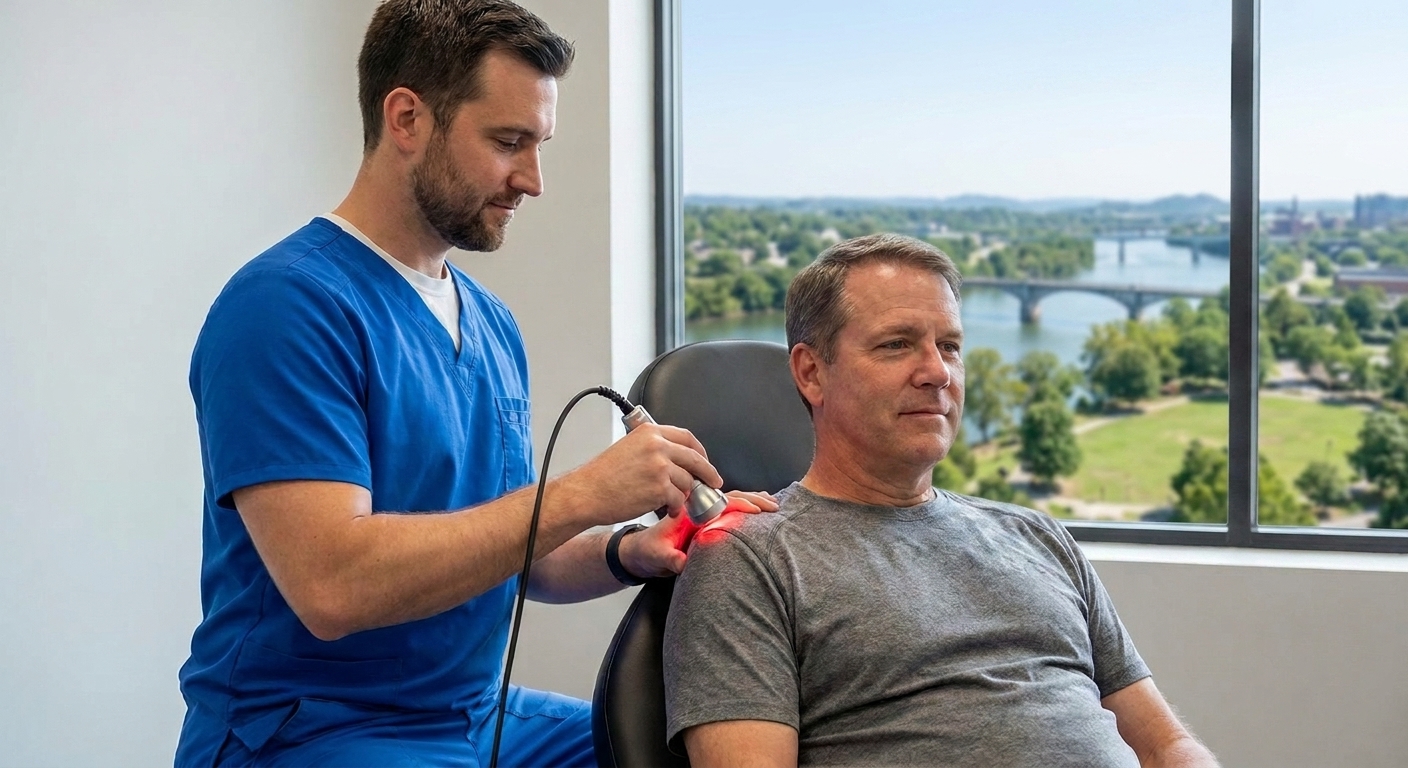
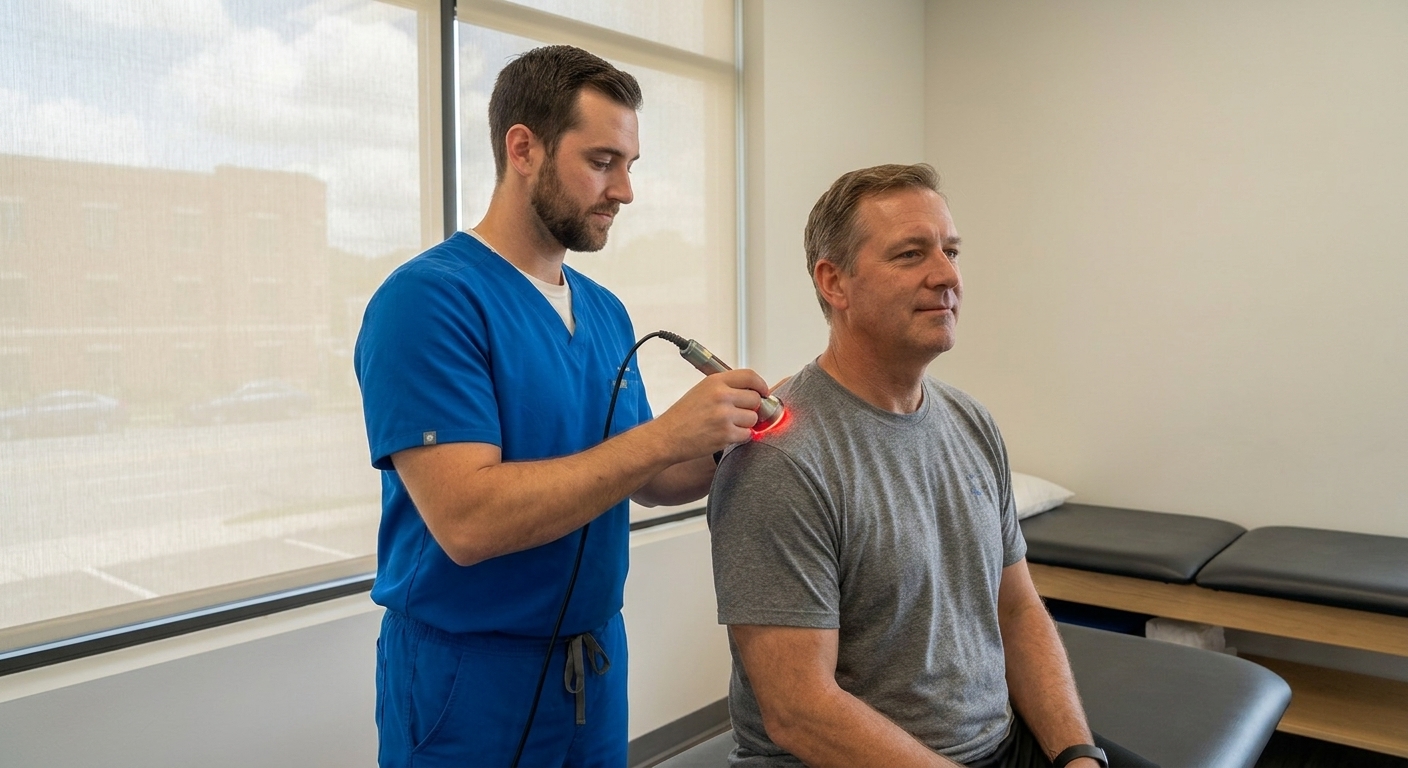
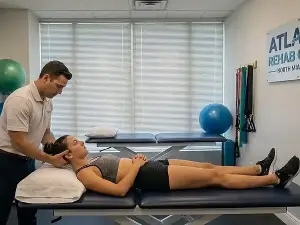
A typical session is straightforward. You sit or lie down while a clinician positions the laser device over your shoulder. The laser emits light that feels warm—sometimes deeply soothing, never painful. There's no burning, no cutting, no needles. The provider moves the applicator over the injured area, ensuring full coverage of the damaged tissue.
Sessions usually last between ten and twenty minutes. Frequency depends on severity—some patients come in three times a week for a few weeks, others need maintenance visits after the initial healing phase. Progress is trackable. Pain scores drop. Strength improves. Functionality returns. And because there's no recovery period, you can return to work, training, or daily life immediately.
The Benefits Stack Up Fast
- Non-invasive approach with zero surgical risk
- No pharmaceutical side effects or dependency concerns
- Faster recovery compared to passive rest or traditional rehab alone
- Significant reduction in inflammation and swelling
- Improved tissue regeneration at the cellular level
Who Benefits Most from Laser Therapy
Class IV laser therapy works best for partial rotator cuff tears, tendinitis, bursitis, and chronic shoulder pain that hasn't responded to conservative care. It's also highly effective as a post-surgical adjunct, speeding up recovery and reducing scar tissue formation. Athletes use it to stay in the game. Manual laborers use it to avoid extended time off. And older adults use it to regain independence without going under the knife.
That said, it's not a miracle cure for full-thickness tears that require surgical repair. But even in those cases, laser therapy can prepare the tissue for surgery and accelerate healing afterward. The key is getting evaluated early and tailoring the treatment to the specific injury.
What Disqualifies Someone from Treatment
- Active cancer in or near the treatment area
- Pregnancy, particularly over the abdomen or lower back
- Direct application over the thyroid gland
- Photosensitivity disorders that react poorly to light therapy
- Hemorrhaging or uncontrolled bleeding disorders
Finding the Right Provider in Knoxville
Not all laser therapy is created equal. Class IV lasers require proper training, calibration, and clinical judgment. In Knoxville, look for providers who specialize in musculoskeletal injuries and have documented experience treating rotator cuff damage. Ask about the equipment they use, how many sessions are typically required, and what kind of results their patients are seeing.
We've worked with patients who wasted months bouncing between practitioners who didn't understand the technology or used outdated equipment. The difference between a trained specialist and someone running a laser for the first time is night and day. Don't settle for convenience—find someone who knows what they're doing.
Pairing Laser Therapy with Rehab Amplifies Results
- Laser therapy reduces pain and inflammation, making physical therapy more effective
- Strengthening exercises rebuild stability while tissue heals
- Posture correction prevents re-injury and uneven loading
- Mobility drills restore full range of motion faster
- Combination approaches often cut total recovery time in half
Cost and Insurance Coverage
Class IV laser therapy isn't always covered by insurance, though some plans do reimburse when it's deemed medically necessary. Out-of-pocket costs vary depending on the clinic and treatment plan, but most providers in Knoxville offer package pricing or payment plans. Compared to the cost of surgery, imaging, anesthesia, and months of follow-up, laser therapy is often the more affordable route—especially when it eliminates the need for those interventions entirely.
Before committing, ask for a cost breakdown and check with your insurer. Many patients find that even without coverage, the return on investment is worth it when they regain function and avoid invasive procedures.
Tracking Progress Matters
- Pain scale assessments before and after each session
- Range of motion testing to measure improvement
- Strength evaluations to confirm functional recovery
- Ultrasound or MRI follow-ups in cases of significant tears
- Patient-reported outcomes on daily activities and work capacity
Why Waiting Makes Everything Worse
Rotator cuff injuries don't heal themselves. Left untreated, partial tears become full tears. Inflammation becomes chronic. Muscle atrophy sets in. Scar tissue forms. And eventually, what could have been resolved with a few weeks of laser therapy turns into a surgical case with a six-month recovery timeline.
We've seen it happen too many times—patients who thought they could tough it out, only to lose strength and mobility they'll never fully get back. Early intervention is everything. The sooner you address the damage, the better your odds of a full recovery.
Getting Started Is the Hard Part
Nobody wants to admit their shoulder isn't healing. But pretending the problem doesn't exist won't make it go away. Class IV laser therapy offers a proven, low-risk option that works with your body's natural healing process—not against it. In Knoxville, the technology is here, the providers are trained, and the results speak for themselves. If you're dealing with rotator cuff pain that's limiting your life, it's time to stop managing symptoms and start rebuilding tissue.
Let’s Restore Your Shoulder Together
We know how frustrating it is when shoulder pain keeps you from doing what you love. Let’s work together to get you back to full strength with a treatment plan that actually addresses the root of your rotator cuff injury. If you’re ready to take the next step, give us a call at 865 240-3550 or request an appointment today and let’s start your recovery journey.
‹ Back
Recent Posts
-
-
Pelvic Health Therapy in Knoxville for Incontinence After Childbirth
September 30, 2026
-
Shockwave Therapy in Knoxville for Chronic Prostatitis
September 16, 2026
-
Can Physical Therapy in North Miami Beach Ease Neck Pain From Sports?
September 2, 2026
-