







How Laser Therapy Eases Plantar Fasciitis & Speeds Ankle Sprain Healing
Most people think foot pain is just something you push through. Ice it, wrap it, hope it goes away. But plantar fasciitis and ankle sprains don't care about your schedule. They dig in, slow you down, and stick around longer than you'd like. Traditional treatments work — sometimes. Rest helps. Physical therapy helps. But if you're looking for something that actually accelerates the process without surgery or heavy meds, laser therapy is worth understanding.
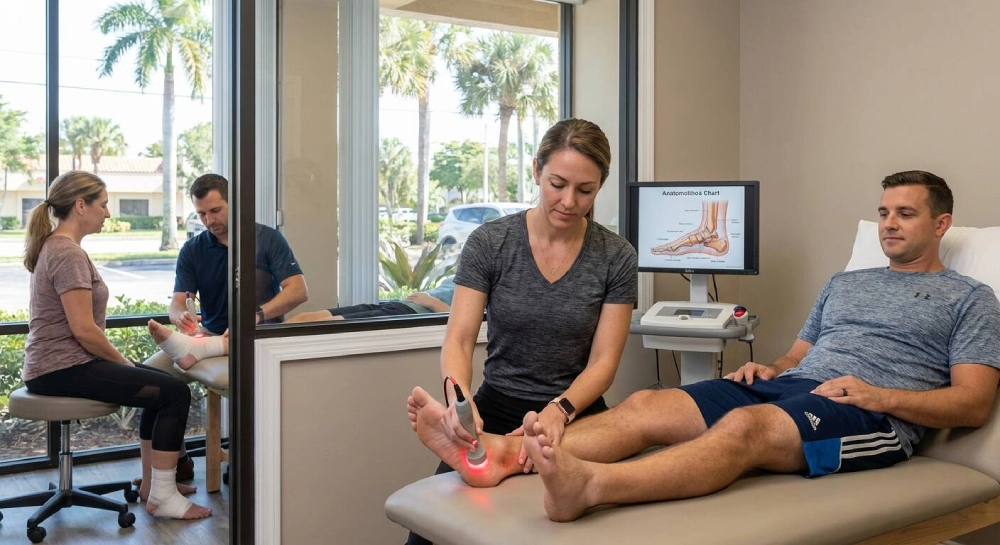
We're not talking about science fiction. This is low-level laser therapy, and it's been used for years to treat soft tissue injuries. The light penetrates deep, triggers cellular repair, and gets you moving again faster than passive recovery alone. No cutting. No downtime. Just targeted energy that your body knows how to use.
The Real Problem With Plantar Fasciitis
Plantar fasciitis isn't just sore feet. It's inflammation in the thick band of tissue running from your heel to your toes — the plantar fascia. When that tissue gets overworked or strained, it swells. And when it swells, every step reminds you. Runners deal with it. People on their feet all day deal with it. Even desk workers who suddenly ramp up activity can trigger it.
The pain usually hits hardest in the morning. That first step out of bed? Brutal. It eases as you move, but it never fully disappears. Left untreated, it can linger for months. And the longer it sticks around, the harder it is to shake.
Ankle Sprains Are More Than a Twist
Ankle sprains happen fast. One bad step, one awkward landing, and the ligaments stretch or tear. Swelling follows. Bruising shows up. Walking becomes a chore. Mild sprains heal in a week or two. Severe ones? You're looking at weeks of limited mobility, and even then, instability can linger if the ligaments don't heal right.
The problem isn't just the initial injury. It's what happens after. Weak or improperly healed ligaments leave you vulnerable to re-injury. That's why so many people who sprain an ankle once end up doing it again. The tissue didn't get strong enough the first time around.
What Laser Therapy Actually Does
Laser therapy uses specific wavelengths of light to reach damaged tissue below the skin. It's not a heat laser. It doesn't burn or cut. It delivers energy that your cells absorb and convert into fuel for repair. The technical term is photobiomodulation, but what matters is the result.
When that light hits inflamed or injured tissue, several things happen. Blood flow increases. Inflammation drops. Cells start producing more ATP, which is the energy they need to rebuild. Pain signals get interrupted. The body's natural healing process kicks into a higher gear. And because it's non-invasive, there's no recovery period from the treatment itself.
How It Tackles Plantar Fasciitis
Laser therapy doesn't just mask the pain. It goes after the root cause. For plantar fasciitis, that means reducing the inflammation that's making every step hurt. The light penetrates deep into the fascia, calming the swelling and giving the tissue room to heal.
Here's what happens during treatment:
- Inflammation drops as the laser reduces swelling in the plantar fascia
- Cellular repair accelerates thanks to increased ATP production
- Blood flow improves, delivering oxygen and nutrients to the damaged area
- Pain decreases as endorphins release and nerve signals calm down
- Tissue regeneration speeds up, shortening overall recovery time
Most people notice relief within a few sessions. The pain doesn't vanish overnight, but it starts to ease. And as the tissue heals, the improvements stack. You're not just managing symptoms — you're fixing the problem.
How It Speeds Ankle Sprain Recovery
Ankle sprains need more than rest. They need the ligaments to heal correctly, and that takes time. Laser therapy compresses that timeline by giving your body the tools to repair faster. Swelling goes down. Bruising fades. The ligaments knit back together with less scar tissue and more strength.
Here's what laser therapy does for sprains:
- Swelling and bruising reduce as inflammation gets controlled
- Ligament repair accelerates through boosted cellular activity
- Pain relief makes it easier to start rehab exercises sooner
- Range of motion improves as stiffness decreases
- Risk of chronic instability drops because the ligaments heal more completely
Laser therapy works best when combined with physical therapy treatments. The laser handles the biological side — reducing inflammation, speeding repair. PT handles the mechanical side — rebuilding strength, restoring balance. Together, they cut recovery time and lower the chance of re-injury.
What a Session Looks Like
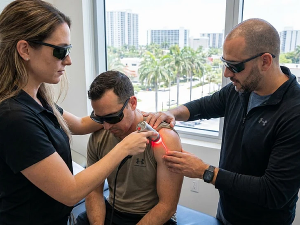
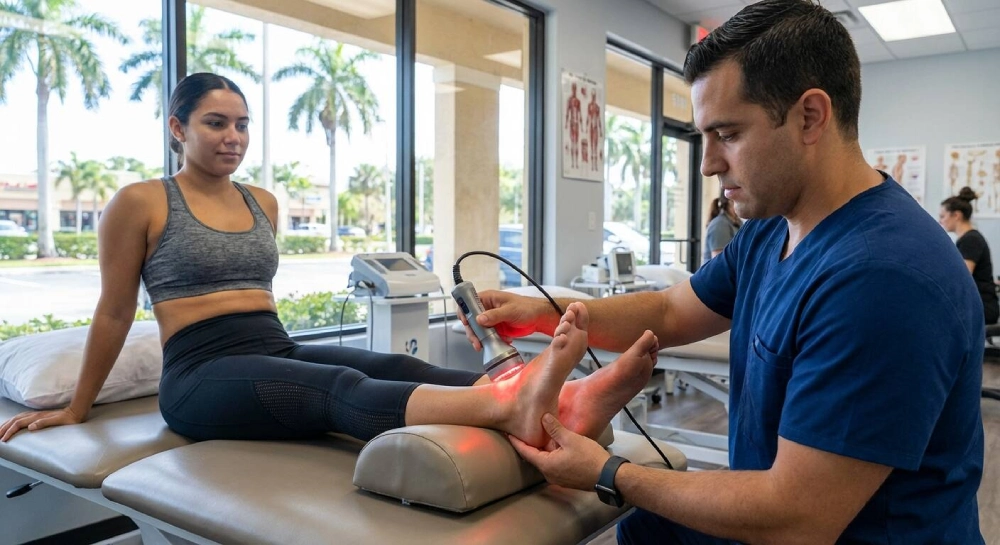
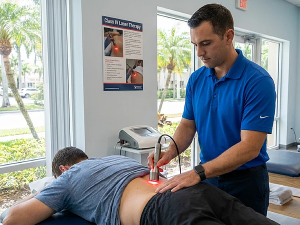
Sessions are quick. You're in and out in under twenty minutes. A handheld device gets positioned over the injured area, delivering light in controlled doses. You might feel warmth. You might feel a slight tingling. Most people feel nothing at all. There's no pain, no needles, no anesthesia.
Afterward, you walk out the door. No bandages. No restrictions. You can go back to work, hit the gym, or do whatever your injury allows. The treatment doesn't add downtime — it reduces it.
Who Should Consider It
Laser therapy works for most people dealing with soft tissue injuries. If you've been stuck in a cycle of rest and re-injury, it's worth exploring. If traditional treatments aren't moving the needle fast enough, this might be the push your body needs.
That said, it's not for everyone. Certain medical conditions, pregnancy, or active infections can make laser therapy a poor fit. A healthcare provider can assess whether it's right for your situation and build a treatment plan that makes sense.
Why Documentation Still Matters
If you're going through insurance or tracking treatment for work injuries, keep records. Not every plan covers laser therapy, and some require pre-authorization. Save your treatment notes. Track your progress. Document what worked and what didn't.
Here's what you'll want on file:
- Initial diagnosis and severity assessment from your provider
- Treatment plan outlining session frequency and duration
- Progress notes showing pain levels and mobility improvements
- Receipts and billing codes for insurance claims
- Any follow-up imaging or evaluations that confirm healing
Good records protect you if questions come up later. They also help your provider adjust treatment if progress stalls.
Common Mistakes People Make
Laser therapy is effective, but it's not magic. People mess up when they expect instant results or skip the rehab work. The laser accelerates healing — it doesn't replace the effort you need to put in.
Here's where most people go wrong:
- Skipping physical therapy because the pain improved
- Returning to full activity too soon and re-injuring the area
- Stopping treatment early because they felt better after a few sessions
- Ignoring the underlying cause, like poor footwear or weak ankles
- Expecting laser therapy to work without any lifestyle adjustments
Healing isn't just about reducing pain. It's about rebuilding strength, correcting imbalances, and preventing the next injury. Laser therapy gets you there faster, but you still have to do the work.
Faster Healing Starts With Better Tools
Plantar fasciitis and ankle sprains don't have to sideline you for months. Foot pain relief through laser therapy offers a proven way to cut recovery time, reduce pain, and get back to full function without invasive procedures or heavy medication. It's not a replacement for smart rehab and proper care, but it's a powerful addition that makes the process faster and more effective. If you're tired of waiting for your body to catch up, this is the kind of tool that actually moves the needle.
Let’s Get You Moving Again
We know how frustrating it is to be held back by foot pain or a stubborn ankle injury. If you’re ready to take the next step toward real recovery, let’s talk about how laser therapy can help you get back on your feet faster. Call us at 954 474-3611 or request an appointment and let’s start your path to pain-free movement together.
‹ Back
Recent Posts
-
Can Physical Therapy in North Miami Beach Ease Neck Pain From Sports?
September 2, 2026
-
-
Can Physical Therapy in Davie Help After an ACL Tear?
August 5, 2026
-
-