








How Video Analysis Helps Improve Throwing, Hitting, Running & Jumping Mechanics
Most athletes think they know what their body's doing. They feel the motion, they see the result, and they assume everything in between is fine. But the truth is, your brain lies to you. What feels smooth might be inefficient. What looks powerful might be putting stress on the wrong joints. And if you're not recording it, you're guessing.
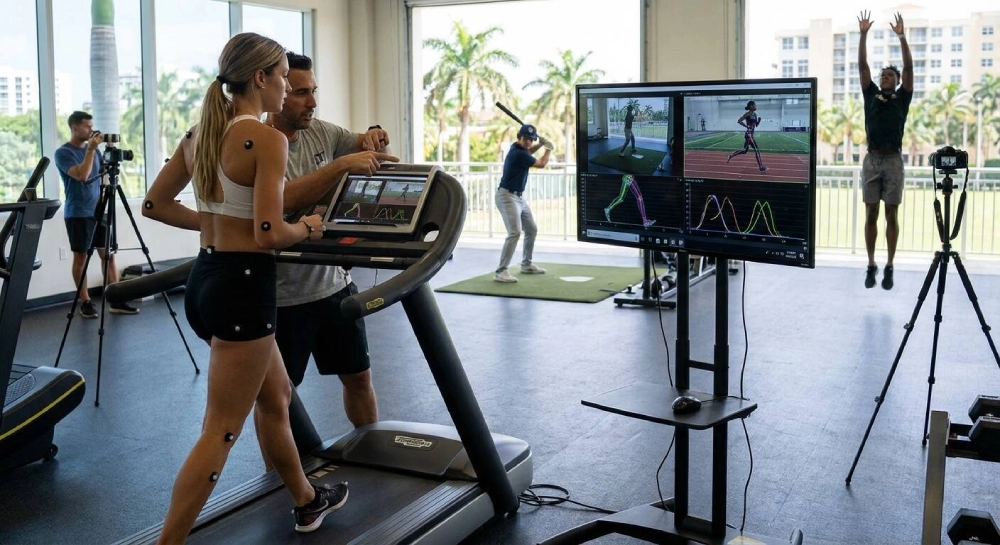
Video analysis strips away the guesswork. It shows you what's actually happening — not what you think is happening. Frame by frame, angle angle by angle, it reveals the flaws you can't feel and the patterns you didn't know existed. And once you see them, you can fix them. That's where real improvement starts.
The Gap Between Feel and Reality
Athletes rely on proprioception — the sense of where their body is in space. But proprioception isn't perfect. You might think your elbow is staying high during a throw, but the camera shows it dropping. You might feel like you're landing softly after a jump, but the footage reveals your knees collapsing inward. These disconnects are common, and they're costing you performance.
Video doesn't care about how something felt. It shows what happened. And when you compare your movement to elite athletes or to your own past performances, the differences become obvious. That's when coaching stops being abstract and starts being actionable. You're not just hearing advice — you're seeing proof.
Breaking Down the Throw
Throwing is one of the most complex athletic movements. It requires coordination across the entire kinetic chain — legs, hips, torso, shoulder, elbow, wrist. Miss one link, and the whole sequence suffers. Video analysis lets us isolate each phase and identify where the breakdown happens.
We've seen pitchers who thought they were driving off the mound, only to discover their back leg was collapsing early. We've worked with quarterbacks who believed their release was quick, but the tape showed a hitch in their motion. These aren't things you can feel in the moment. But once you see them, you can drill them out.
- Arm slot consistency across different pitch types or throw distances
- Hip and shoulder separation during the wind-up or load phase
- Timing of weight transfer from back leg to front leg
- Follow-through mechanics and how they affect accuracy and velocity
- Elbow and shoulder angles at release to reduce injury risk
Swing Mechanics Under the Microscope
Hitting is about timing, but it's also about positioning. A hitter's stance, load, stride, and swing path all need to sync up in a fraction of a second. Video analysis breaks that fraction into digestible pieces. We can see if the hands are casting away from the body, if the hips are opening too early, or if the bat path is cutting across the zone instead of staying through it.
The best part? You can overlay swings. Compare a strikeout to a home run. Compare your swing to a pro's. The differences jump out. And once you know what to fix, you can rep it until it sticks. No more blind adjustments based on vague feedback.
- Bat speed at contact and how it correlates with launch angle
- Head movement during the swing and its impact on tracking the ball
- Front foot placement and how it affects balance and power transfer
- Hand position at launch and whether the barrel is lagging or leading
- Finish mechanics and how they reveal energy leaks in the swing
Running Form That Actually Holds Up
Everyone runs. Not everyone runs efficiently. Video analysis exposes the little things that add up over distance or speed. Overstriding wastes energy and increases impact forces. Poor arm mechanics throw off your rhythm. Excessive vertical oscillation means you're bouncing, not moving forward.
We use video to measure stride length, ground contact time, and posture alignment. Then we compare those metrics to benchmarks or to the athlete's own baseline. The goal isn't to make everyone run the same way — it's to make each athlete run their best way. And that starts with seeing what's actually going on.
- Foot strike pattern and whether it's contributing to injury risk
- Knee drive height and how it affects stride power
- Arm swing symmetry and its role in maintaining balance
- Hip extension at push-off and how it translates to forward propulsion
- Posture lean and whether the torso is aligned over the hips
Jumping Mechanics That Generate Height
Jumping isn't just about leg strength. It's about coordination, timing, and force transfer. Video analysis helps us see whether an athlete is loading properly, whether their arms are contributing to lift, and whether they're losing power through poor takeoff angles or premature extension.
We also look at landing mechanics. A bad landing can negate a great jump — and it can lead to knee pain relief needs or ankle injuries. By reviewing footage, we can teach athletes to absorb force correctly and reset for the next movement. That's especially critical in sports where jumping happens repeatedly, like basketball or volleyball.
- Countermovement depth and how it primes the stretch reflex
- Arm swing timing and whether it's synced with leg extension
- Takeoff angle and how it affects vertical versus horizontal distance
- Hip and knee extension at peak height
- Landing mechanics and whether the knees are tracking over the toes
Spotting Patterns Before They Become Problems
Video analysis isn't just for fixing what's broken. It's for catching what's about to break. Repetitive stress injuries don't happen overnight — they build up over time, often because of small mechanical flaws that go unnoticed. By reviewing footage regularly, we can spot those flaws early and make corrections before they turn into pain or lost time.
This is especially valuable for young athletes who are still developing. Their bodies are changing, and their mechanics need to adapt. Video gives us a way to track that development and make sure bad habits don't take root. It's proactive, not reactive.
- Asymmetries in movement that could lead to overuse injuries
- Fatigue-related breakdowns in form during late-game or late-practice reps
- Compensation patterns that emerge after minor injuries
- Technique drift over the course of a season
- Developmental changes in growing athletes that require mechanical adjustments
Technology That Fits in Your Pocket
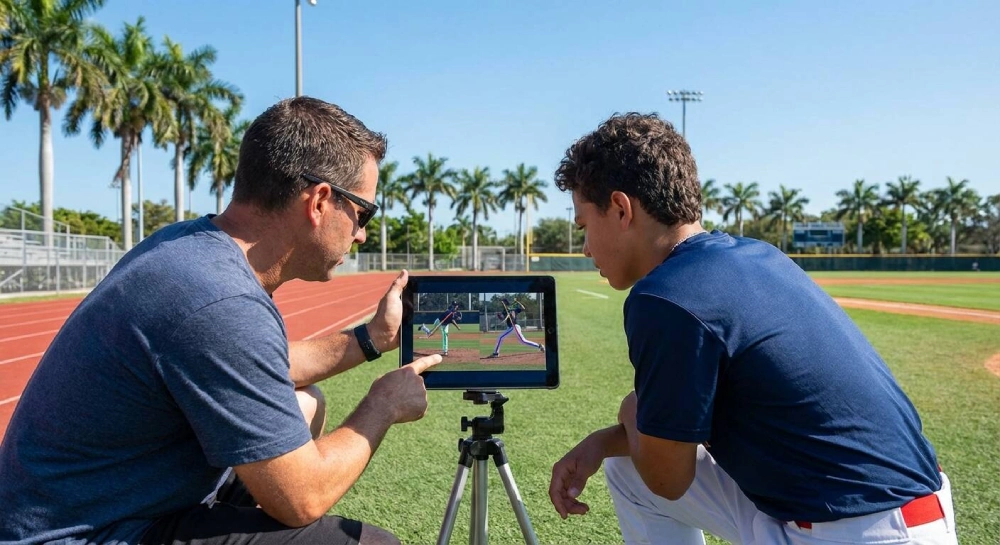
You don't need a motion-capture lab to do this. A smartphone and a tripod will get you most of the way there. There are apps that let you draw lines, measure angles, and compare clips side by side. Some even use AI to track joint positions automatically. The barrier to entry is lower than it's ever been, and the return on investment is massive.
We've worked with athletes who made significant gains just by recording themselves once a week and reviewing the footage with a coach. It doesn't take hours. It takes attention to detail and a willingness to see the truth, even when it's uncomfortable.
Proof You Can't Argue With
Video analysis cuts through the noise. It doesn't matter if you've been doing something the same way for years — if it's not working, the tape will show it. And once you see it, you can't unsee it. That's when change happens. Not because someone told you to, but because you saw the evidence yourself and decided to do something about it.
We help athletes move better, perform smarter, and stay healthier through sports medicine and sports injury prevention. Video analysis is one of the most powerful tools we have to make that happen. Our physical therapy treatments incorporate advanced movement analysis to address shoulder pain relief, hip pain relief, and other musculoskeletal concerns that affect athletic performance. If you're serious about improvement, you need to see what you're doing through comprehensive physical therapy services. Everything else is just noise.
Ready to See Real Progress?
We believe every athlete deserves to move with confidence and perform at their best. If you're ready to take the guesswork out of your training and unlock your true potential, let's work together. Give us a call at 305-405-0400 or request an appointment today to get started with a team that understands what it takes to help you move better, play smarter, and stay healthy for the long run.
‹ Back
Recent Posts
-

Pelvic Health Therapy in Knoxville for Incontinence After Childbirth
September 30, 2026
-
Shockwave Therapy in Knoxville for Chronic Prostatitis
September 16, 2026
-
Can Physical Therapy in North Miami Beach Ease Neck Pain From Sports?
September 2, 2026
-
-
Can Physical Therapy in Davie Help After an ACL Tear?
August 5, 2026