





Why Class IV Laser Therapy Helps With Tennis Elbow and Golfer's Elbow
Most people think elbow pain is just about rest and ice. Stop the activity, wait it out, maybe pop some ibuprofen. But tennis elbow and golfer's elbow don't heal that way — not reliably, anyway. These aren't bruises. They're tendon injuries with limited blood flow and stubborn inflammation. And if you're still hurting months later, it's because the tissue isn't getting what it needs to repair itself.
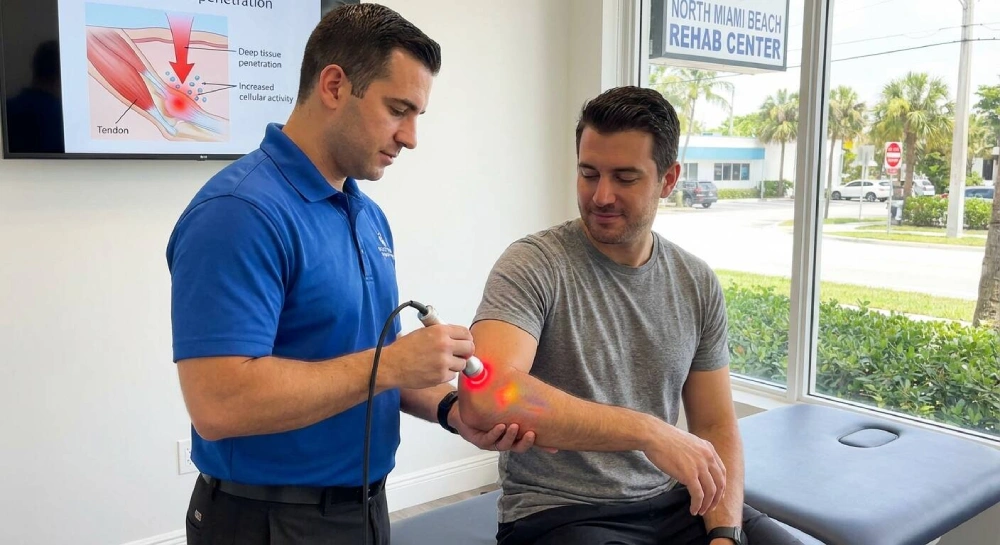
That's where Class IV laser therapy comes in. It's not a gimmick. It's photobiomodulation — light energy that penetrates deep enough to reach damaged tendons and kick-start the healing process from the inside. No needles, no downtime, and no guessing whether it's working. The science backs it up, and the results show up fast.
Light That Actually Reaches the Problem
Class IV lasers aren't the same as the low-level devices you might've seen at a spa or chiropractor's office. They're more powerful, which means they can push through skin, muscle, and connective tissue to hit the exact spot where the damage lives. That depth matters when you're dealing with tendons wrapped around bone.
The laser delivers specific wavelengths that your cells absorb. Once that energy gets in, it triggers a cascade of biological responses — more ATP production, better oxygen delivery, faster tissue turnover. It's not magic. It's just giving your body the fuel it needs to do what it's supposed to do.
Your Cells Get More Energy to Rebuild
When laser light hits the mitochondria inside your cells, it ramps up ATP production. That's the molecule your body uses for energy. More ATP means your cells can repair damage faster, regenerate tissue more efficiently, and clear out the junk that's been sitting in the injury site.
At the same time, blood flow increases. Fresh oxygen and nutrients flood the area. Inflammatory byproducts get flushed out. The whole system starts working again instead of stalling out in chronic pain mode.
Why Tendon Injuries Drag On
Tendons don't heal like muscles. They have less blood supply, which means fewer resources for repair. That's why tennis elbow and golfer's elbow can linger for months — or longer — even when you're doing everything right. The tissue just isn't getting enough support to close the gap.
Class IV laser therapy solves that problem by artificially boosting circulation and cellular activity. It doesn't replace the body's natural healing process. It accelerates it. And that's the difference between waiting six months and feeling better in six weeks.
What the Therapy Actually Does
We've seen this work across hundreds of patients. The benefits aren't subtle. They're measurable, repeatable, and backed by clinical research. Here's what happens when you use laser therapy for elbow tendinopathy:
- Inflammation drops because the laser reduces pro-inflammatory chemicals and boosts anti-inflammatory mediators
- Tissue repair speeds up thanks to increased ATP and enhanced cellular metabolism
- Blood flow improves, delivering more oxygen and nutrients to the injury site
- Pain decreases both immediately and over time as endorphins release and swelling goes down
- No invasive procedures, no recovery time, and virtually no side effects
Sessions Are Quick and Painless
You're not sitting in a clinic for hours. Most treatments take between five and fifteen minutes depending on severity. You'll feel warmth where the laser touches your skin — that's it. No discomfort, no needles, no anesthesia.
Most people need somewhere between six and twelve sessions to see full results. But elbow pain relief often starts showing up after just two or three visits. Grip strength improves. Range of motion comes back. You stop wincing every time you reach for something.
The Research Holds Up
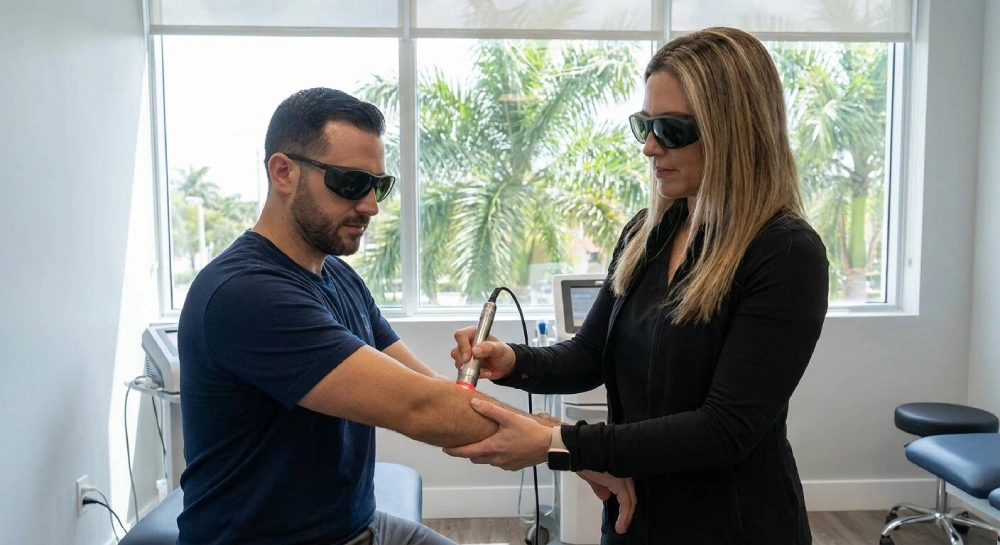
This isn't experimental. Multiple studies have shown that laser therapy outperforms placebo and standard care for tendinopathies. Patients report faster pain reduction, better function, and stronger grip compared to those who only did physical therapy or took anti-inflammatories.
The therapy is also safe. Adverse effects are rare and mild. No one's getting worse from this. They're getting better — and they're getting better faster than they would with rest alone.
Who Should Consider This
If you've been dealing with elbow pain for weeks or months and nothing's working, this is worth exploring. It's especially useful for athletes, manual laborers, and anyone who can't afford to sit out for half a year waiting for tendons to heal on their own.
That said, you still need a proper evaluation. Not every elbow issue is a tendinopathy, and not every tendinopathy responds the same way. A qualified provider can assess whether Class IV laser therapy fits your situation — and if it does, they'll map out a treatment plan that makes sense.
What You Should Bring to Your First Visit
Documentation helps. If you've had imaging done, bring it. If you've tried other treatments, let your provider know what worked and what didn't. The more context they have, the better they can tailor the therapy to your specific injury.
- Any MRI or ultrasound results showing tendon damage
- A list of previous treatments and their outcomes
- Notes on when the pain started and what makes it worse
- Your activity level and what you're trying to get back to
- Any other medical conditions that might affect healing
Common Mistakes That Slow Recovery
Even with laser therapy, people mess up their own progress. They feel better after a few sessions and immediately go back to the activity that caused the injury in the first place. Or they skip sessions because they're "too busy." Or they don't follow through with the strengthening exercises their provider recommends.
Laser therapy accelerates healing, but it doesn't make you invincible. You still need to respect the tissue while it's rebuilding. That means modifying your activity, doing your rehab work, and finishing the full course of treatment even when you feel good.
Why This Works When Other Treatments Stall
Rest doesn't fix chronic tendon damage. Ice helps with acute inflammation, but it doesn't rebuild tissue. Anti-inflammatories mask pain without addressing the root cause. Physical therapy for chronic pain is great — but only if the tissue has enough resources to respond to the stimulus.
Class IV laser therapy gives your body what it's been missing. It doesn't just manage symptoms. It changes the environment inside the injury so that real healing can happen. That's why people who've been stuck in pain for months finally start seeing progress.
Putting Light to Work
Tennis elbow and golfer's elbow aren't minor annoyances. They're legitimate injuries that can derail your work, your workouts, and your quality of life. But they don't have to drag on forever. Class IV laser therapy for recovery offers a proven, non-invasive way to speed up recovery and get you back to full function without surgery or long-term medication use. If you're tired of waiting for your elbow to heal on its own, this is the tool that actually moves the needle.
Ready to Get Back in the Game?
We know how frustrating it is to be sidelined by stubborn elbow pain. Let’s work together to get you back to doing what you love—without the endless waiting and guesswork. Reach out to us at 305-405-0400 or request an appointment and let’s start your recovery journey today.
‹ Back
Recent Posts
-
Pelvic Health Therapy in Knoxville for Incontinence After Childbirth
September 30, 2026
-
Shockwave Therapy in Knoxville for Chronic Prostatitis
September 16, 2026
-
Can Physical Therapy in North Miami Beach Ease Neck Pain From Sports?
September 2, 2026
-
-
Can Physical Therapy in Davie Help After an ACL Tear?
August 5, 2026